![[Logo Cosmedesk]](/media/ljbbhnk4/logo-cosmedesk.svg)
Ingredient in the spotlight: Citral
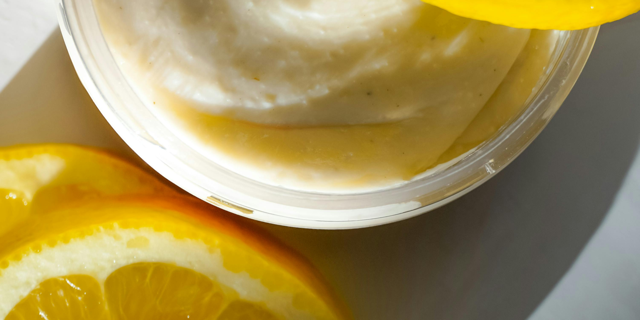
Fragrance plays a powerful role in the cosmetic experience, and behind many fresh, citrusy scents lies a key compound: Citral.
What is Citral?
Citral is a naturally occurring compound found in a variety of citrus fruits and aromatic plants, most notably lemongrass. It consists of a mixture of two closely related compounds - geranial and neral - which are monoterpene aldehydes. Together, they produce a characteristic, pleasant lemon-like odour.
Due to its distinctive scent, Citral is widely used both as a fragrance and flavouring ingredient. Beyond its use as a cosmetic ingredient, it is used in household products and other domestic as well as occupational products.
Safety considerations
Although Citral is derived from natural sources, this does not necessarily mean it is suitable for all users. As a well-established fragrance ingredient, Citral has been extensively evaluated for its toxicological profile, including its potential to cause skin sensitization. It is currently classified as a fragrance allergen in the European Union.
In 2024, the European Commission requested the Scientific Committee on Consumer Safety (SCCS) to assess the upper safe levels of Citral using the quantitative risk assessment 2 (QRA2) methodology for the sensitization endpoint based on the information provided by the industry. The SCCS concluded that Citral can be considered safe with regard to the induction of sensitisation when used at the concentrations proposed for use in cosmetic products. However, the assessment also indicates that exceeding certain concentration thresholds may pose a risk to human health.
Regulatory overview
Citral is regulated as a fragrance allergen under Regulation (EC) No 1223/2009. As such, its presence must be indicated on product labels when concentrations exceed 0.001% in leave-on products and 0.01% in rinse-off products.
Following the SCCS opinion, Regulation (EU) 2026/909 of 27 April 2026 introduced new maximum concentration limits for Citral across various product categories:
-
Lip make-up products, lipstick, lip salves: 0.11%
-
Deodorants and antiperspirants: 0.032 %
-
Eye products, face make-up and make-up remover: 0.65%
-
Fragrance products (hydroalcoholic and non-hydroalcoholic, spray and non-spray): 0.6%
-
Leave-on skin products (except lip products, deodorants and antiperspirants, fragrance products, eye products, face make-up and make-up remover) and nail products: 0.15%
-
Oral products: 0.35%
-
Hair leave-on products: 1.2%
-
Skin and hair rinse-off products: 1.2%
-
Leave-on products for the anogenital area (baby wipes and intimate wipes): 0.063%
Citral remains a valuable and widely used ingredient in the cosmetics industry, contributing significantly to the fresh and appealing sensory profiles of many products. While its natural origin and pleasant fragrance make it highly desirable, its classification as an allergen underscores the importance of careful formulation and regulatory compliance.
References:
Regulation (EC) No 1223/2009 of the European Parliament and of the Council of 30 November 2009 on cosmetic products Commission Regulation (EU) 2026/909 of 27 April 2026 amending Regulation (EC) No 1223/2009 of the European Parliament and of the Council as regards the use of Benzyl Salicylate, Triphenyl Phosphate, Ammonium Silver Zinc Aluminium Silicate, Aluminium, water-soluble zinc salts, Acetylated Vetiver Oil, Citral, HC Blue No 18, HC Red No 18, HC Yellow No 16, Hydroxypropyl-p-phenylenediamine and its dihydrochloride salt, and DHHB in cosmetic products Scientific Committee on Consumer Safety (SCCS). (2024). Opinion on Citral (CAS No. 5392-40-5, EC No. 226-394-6) – sensitisation endpoint (SCCS/1666/24)