![[Logo Cosmedesk]](/media/ljbbhnk4/logo-cosmedesk.svg)
Ingredient in the spotlight: Cannabidiol
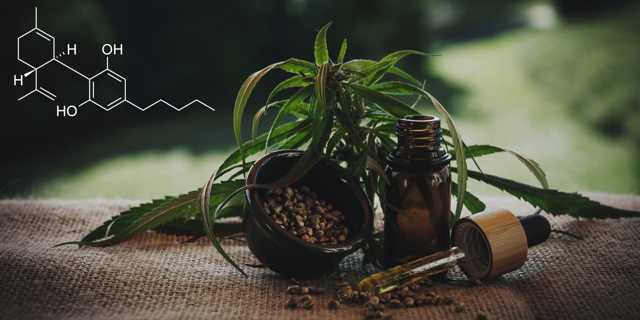
Cannabidiol (CBD) has become one of the most discussed ingredients in the cosmetics industry in recent years. Found in a wide range of cosmetic formulations, this ingredient has attracted significant consumer interest, while simultaneously becoming the subject of extensive regulatory and scientific scrutiny. But what exactly is CBD and what is the current regulatory landscape for its cosmetic use in the European Union (EU)?
What is CBD?
CBD is a naturally occurring cannabinoid found in Cannabis sativa, where it can account for up to 40% of the plant's extract. Unlike tetrahydrocannabinol (THC), CBD is not considered psychoactive and carries no abuse or dependence potential, as concluded by the World Health Organisation (WHO) Expert Committee on Drug Dependence (ECDD).
CBD can be obtained either through extraction from the cannabis plant or through synthetic production routes and is included in CosIng database with reported functions as skin conditioning, skin protecting, antioxidant, and anti-sebum agent.
Regulatory overview
Under Regulation (EC) No 1223/2009 on cosmetic products, substances classified as narcotics under the 1961 United Nations Single Convention on Narcotic Drugs, including cannabis resin and cannabis extracts, are prohibited for use in cosmetic products (Annex II, entry 306). However, in a landmark 2020 ruling (Case C-663/18), the Court of Justice of the EU (CJEU) concluded that pure CBD, as such, is not a narcotic within the meaning of the Convention. This ruling opened the door for pure CBD to be used as a cosmetic ingredient, provided that general product safety requirements are met.
SCCS Scientific Advice
In response to concerns raised by Member States and civil society organisations about the limited safety data available, the European Commission mandated the Scientific Committee on Consumer Safety (SCCS) to carry out a formal safety assessment on Cannabidiol.
The SCCS adopted its final opinion on March 2026. Based on the available data, the SCCS considers that CBD is safe when used at concentrations up to 0.19% in dermal and oral cosmetic products whether used alone or in combination. The SCCS further concluded that the presence of THC impurities is safe at concentrations up to 0.00025% in dermal and oral cosmetic products, whether used alone or in combination. The Committee nevertheless highlighted significant data limitations and noted that its assessment was based exclusively on pure CBD. In addition, the opinion does not cover cosmetic products that may lead to inhalation exposure by consumers.
Emerging Classification Concerns
Alongside the SCCS assessment, a parallel regulatory process is unfolding that carries major implications for the sector. In 2025, the French Agency for Food, Environmental and Occupational Health & Safety (ANSES) submitted a classification proposal to the European Chemicals Agency (ECHA), recommending that CBD be classified as a Reproductive Toxicity Category 1B ("May damage fertility or the unborn child") under Regulation (EC) No 1272/2008 (CLP Regulation), on the basis of animal studies indicating potential adverse effects on reproduction and development.
In March 2026, ECHA’s Risk Assessment Committee (RAC) formally adopted its scientific opinion endorsing the proposed classification. This represents an important step in the harmonised classification process and will now be considered by the European Commission for potential inclusion in Annex VI to the CLP Regulation.
Should a harmonised Reproductive Toxicity Category 1B classification ultimately be adopted, CBD would become subject to Article 15 of the Cosmetics Regulation. Under this provision, substances classified as carcinogenic, mutagenic or toxic for reproduction (CMR) Category 1A or 1B are generally prohibited in cosmetic products unless specific exemption criteria can be demonstrated.
Companies using CBD in cosmetic formulations should thus closely monitor future regulatory developments, as any harmonised CMR classification could fundamentally alter the ingredient's regulatory status within the EU cosmetics framework.
References:
Regulation (EC) No 1223/2009 of the European Parliament and of the Council of 30 November 2009 on cosmetic products Scientific Committee on Consumer Safety (SCCS). Scientific Advice on Cannabidiol (CBD) (CAS/EC No. 13956-29- 1/ 689-176-3) used in cosmetic products, preliminary version of 30 October 2025, final version of 26 March 2026, SCCS/1685/25 World Health Organisation (WHO) Expert Committee on Drug Dependence (ECDD). Critical Review Report on Cannabidiol (CBD). 2018 Court of Justice of the European Union, Case C-663/18 (Kanavape), 19 November 2020 Agence nationale de sécurité sanitaire de l'alimentation, de l'environnement et du travail (ANSES). CLH Report: Proposal for Harmonised Classification and Labelling of Cannabidiol (CBD) Based on Regulation (EC) No 1272/2008 (CLP Regulation), Annex VI, Part 2. February 2025 European Chemicals Agency (ECHA) Committee for Risk Assessment (RAC). Opinion proposing harmonised classification and labelling at EU level of 2-[(1R,6R)-3-methyl-6-prop-1-en-2-ylcyclohex-2-en-1-yl]-5-pentylbenzene-1,3-diol; cannabidiol. CLH-O-0000007642-73-01/F. 2026